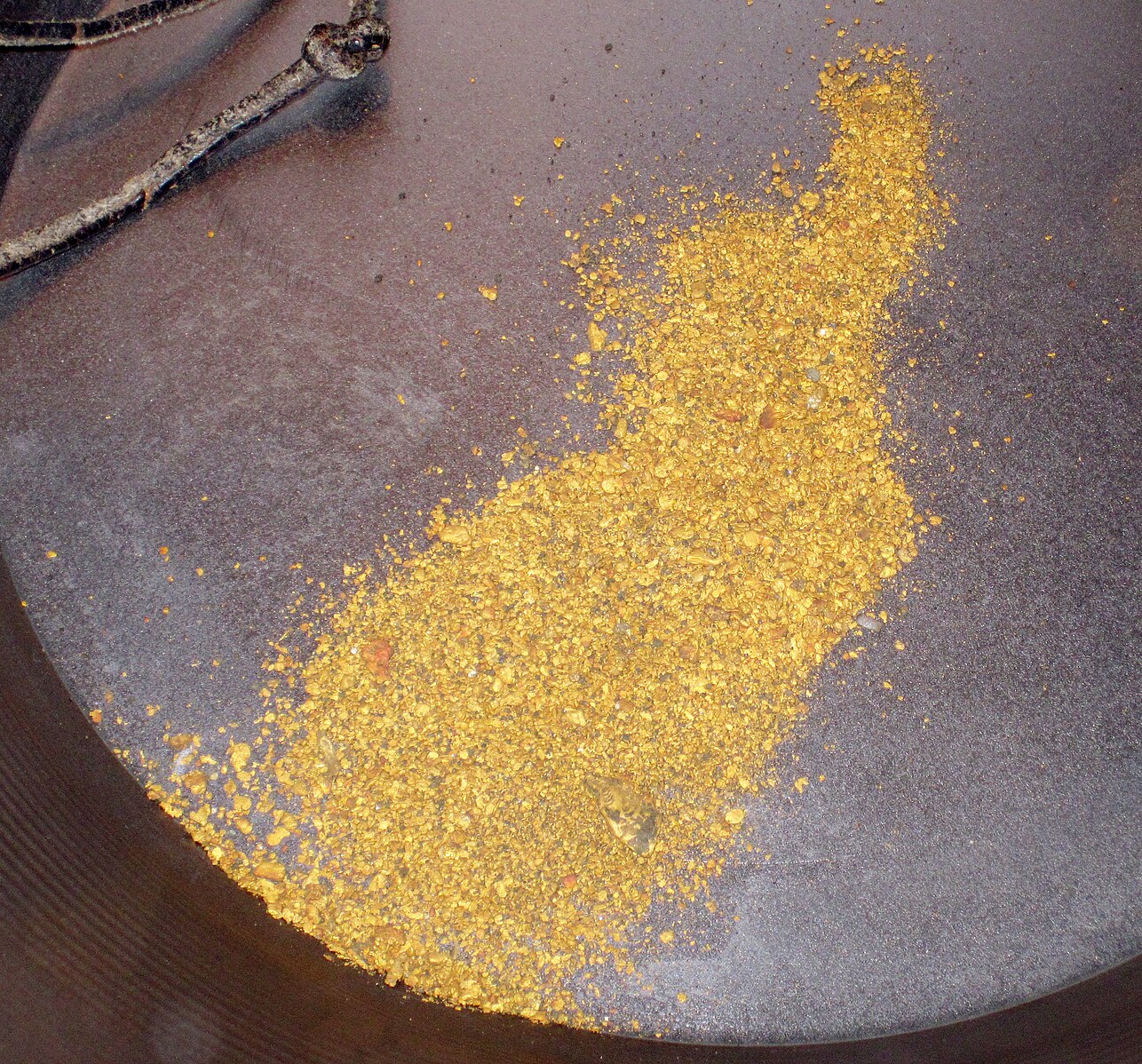
Why Twenty-Four?
Gold could have been measured in tenths, hundredths, or any other fraction. Instead, pure gold is 24 karat, a number inherited from an ancient system of weight.
The word karat can be traced to the Greek keration, meaning carob seed, passed into Arabic as qīrāṭ, then into medieval Latin and the European carat. The American spelling karat, used specifically for gold purity, came much later. Carob seeds were once used as small units of weight, including in the measurement of precious materials.
Under the Roman system, the gold solidus was divided into twenty-four units. Because the coin was made from nearly pure gold, twenty-four parts eventually became the measure for pure gold itself.
The system survives in the karat scale used today. A 22-karat alloy contains twenty-two parts gold and two parts other metals, or 91.6 percent gold. Eighteen-karat contains eighteen parts gold and six parts other metals, making it 75 percent gold.
Hardness and Colour
22-karat gold has a reputation for being too soft for everyday wear. The history of jewelry makes that difficult to sustain.
Adding silver and copper does make gold harder. An 18-karat alloy will generally begin harder than a comparable 22-karat one. But hardness does not come from alloy alone. But gold also hardens as it is worked: Hammer it. Roll it into sheet. Draw it repeatedly through smaller holes to make wire. Form it around a mandrel. Each operation changes the metal and increases its hardness, while a piece that is cast and minimally worked relies more heavily on its alloy for strength.
The difference between 22kt and 18kt therefore isn’t just about numbers (91.6% vs. 75% gold). 22-karat gold trusts the maker as the softness of the gold invites skill. It demands that the final form come from the artisan’s hand, not a machine.
We love how even within 22kt there’s nuance. A little more silver, a touch more copper, and the color shifts. Some 22kt gold glows saffron-yellow, some leans warmer, or slightly green. An alloy recipe can become a workshop’s signature–reflections of each goldsmith’s lineage, formula, and touch.
How 18 Karat Became a Standard
For most of gold’s history, there was no karat standard. Ancient cultures often worked in high-karat gold, but its exact composition varied considerably. Native gold naturally contains silver and sometimes copper, in proportions that differ from one deposit to another, so the purity of an ancient gold object often reflected the gold available to its maker.
A karat standard requires something more: the ability to refine gold to a specified purity, to measure the result, and an authority with an interest in enforcing it. As refining and assaying became more sophisticated, governments and guilds could begin prescribing exactly how much gold an object had to contain.
18-karat first appears in the English record in 1477, when a statute of Edward IV set the legal standard 18 karats. The change came at the end of a period of severe monetary contraction during the European bullion famine of the fifteenth century. But England did not remain at 18 karats for long. In 1575, under Elizabeth I, the legal standard was raised to 22 karats and remained there for 223 years.
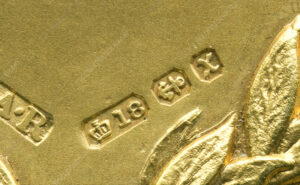
18-karat returned as a legal standard in 1798 following lobbying by watchmakers. For watch cases, the lower karat offered practical advantages: greater hardness and less gold required for each object.
By the middle of the nineteenth century, the circumstances had changed again. Gold discoveries in California in 1848 and Australia in 1851 brought an enormous new supply of gold onto the world market, while jewelry was becoming accessible to a much broader middle-class clientele. New manufacturing methods, machine-made chain and forms of gem setting that benefited from harder alloys also changed what jewelers needed from the metal.
Jewelry as Wealth
The persistence of high-karat gold across South Asia, the Gulf and parts of East and Southeast Asia has as much to do with economics as it does with taste. In these places, jewelry has rarely served a single purpose. Gold is worn for adornment, bought for weddings, given to daughters, inherited, pledged against loans, sold when money is needed, or melted and made into something new. A necklace or set of bangles can move between all of these roles over the course of its life.
For women, this could make a jewelry collection particularly important. In places and periods where property and financial assets were largely controlled by men, gold offered a form of wealth that a woman could wear and, under certain legal and customary systems, hold herself. The relationship was not uniform, and bridal gold could belong to a bride under one system while falling under family control in another, but the prevalence of gold in marriage and inheritance cannot be separated from its financial value.
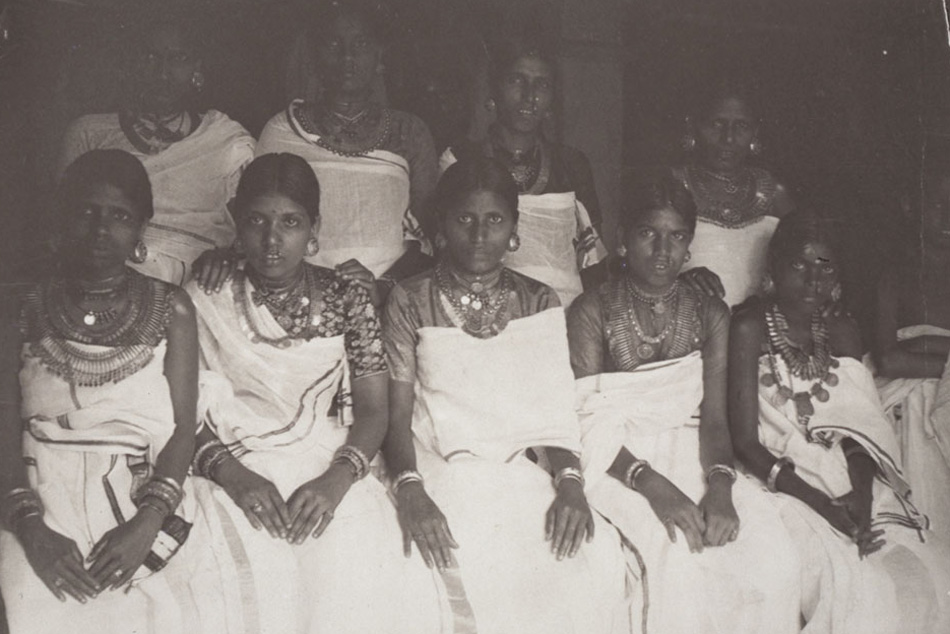
This helps explain why high-karat traditions remain concentrated across South Asia, the Gulf and parts of East and Southeast Asia, while Europe settled largely around 18 karat and the United States embraced 14 karat. At 18 karat, a quarter of the alloy is no longer gold. At 14 karat, it is more than forty percent.
Where its primary value lies in design and adornment, sacrificing some gold content for hardness or price makes sense. Where a piece is also expected to carry wealth across a marriage, a generation or a moment of financial need, keeping more of that wealth in gold matters.
The difference is therefore not simply a regional preference for one colour or another. It is a different expectation of the object. In one place, a gold necklace can be jewellery. In another, the same necklace may also be inheritance, security and cash waiting to be released.
At the Bench
At Iaia, we work primarily in 22-karat and 18-karat gold, choosing the alloy according to the construction and demands of each piece. Much of our 22-karat work is fabricated by hand in Jaipur, where goldsmiths have worked with high-purity gold for centuries and developed techniques around its particular malleability.

High-karat gold asks for a close relationship between the material and the maker. It responds readily to forming, hammering, drawing and setting, processes through which the gold is shaped and hardened by hand. Working in 22 karat allows us to continue working with artisans whose knowledge of these techniques has been passed from one generation to the next.
Choosing 22 karat is therefore also a choice to preserve a way of making. The techniques practiced in Jaipur belong to a much broader history of high-karat goldsmithing across South Asia, the Middle East and parts of East and Southeast Asia, regions where high-purity gold remains closely connected to both the cultural and financial life of jewelry.
At a time when much of the industry chases speed, uniformity, and “sleekness,” we embrace imperfection. A faint solder line, a slight shift in the colour of the gold, or an edge cut by hand records something about how the piece was made. These are small indications of the hands that formed it, and of a material that was worked rather than simply cast into shape.